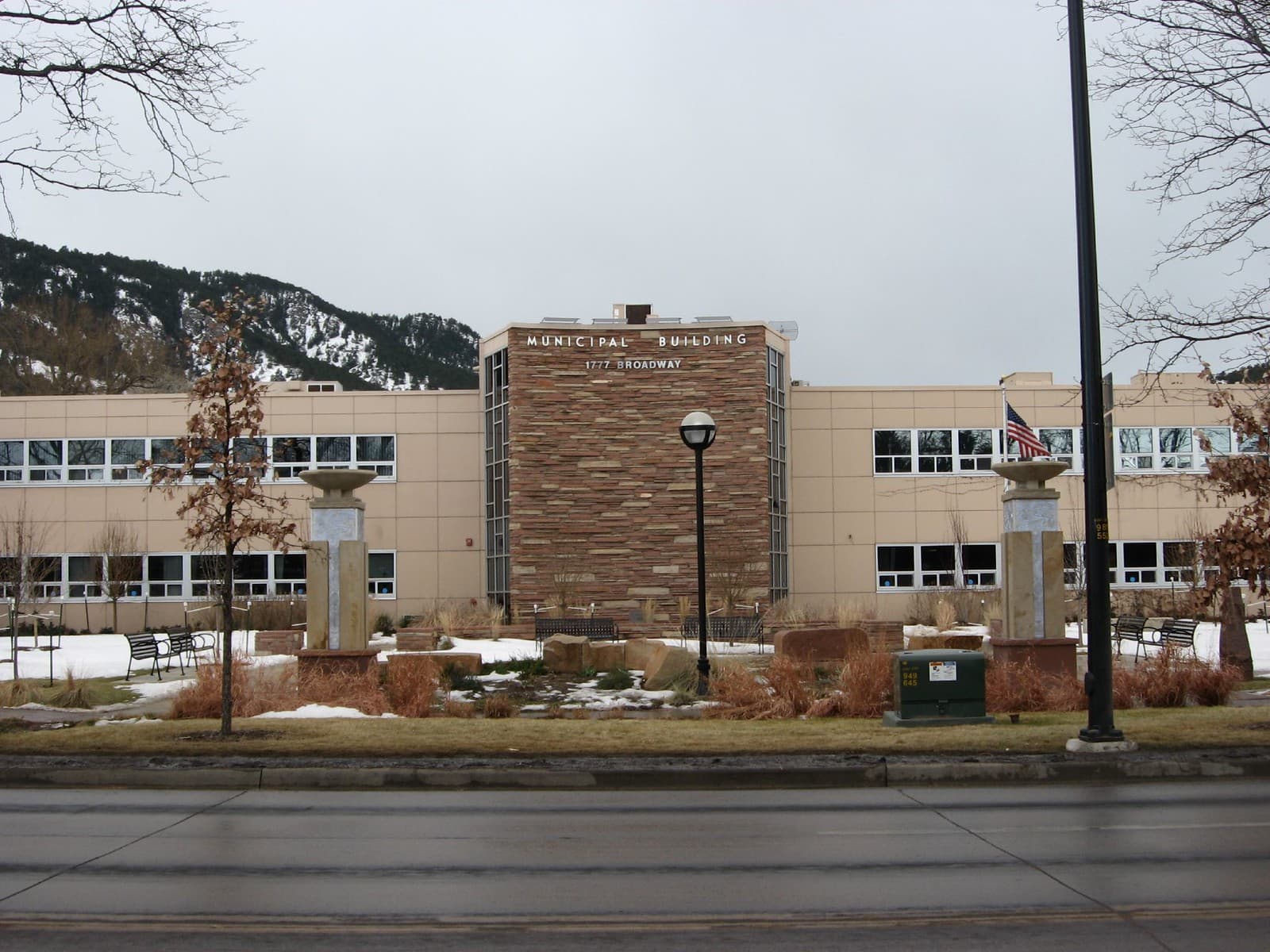
Courthouse News Service reported that Boulder officials have spent millions of dollars on property-damage payouts. The Supreme Court climate case now puts a public-budget question before the justices: can Boulder ask a state court to consider whether ExxonMobil and Suncor should compensate the city and county for harms they allege are tied to the companies’ conduct?
The court heard arguments Monday, but it is not deciding whether the companies caused particular damage or owe money. The justices should not close the courthouse door before Boulder has a chance to test its claims with evidence.
Boulder’s public costs are part of the stakes
Boulder County and the City of Boulder sued ExxonMobil and Suncor in Colorado state court in April 2018. They allege the companies contributed to climate-related harms and seek damages. The claims have not been decided at trial.
The reported payouts do not establish who caused any harm or who should pay for it. Boulder says its local costs also include disaster-related expenses and future infrastructure and hazard-mitigation spending. Its lawsuit asks whether the companies can be held financially responsible for alleged local harms through state law.
That is a meaningful question for a local government managing public costs. But a court allowing the case to proceed would not hand Boulder a recovery or settle the facts. It would allow the parties to present evidence and the state court to decide whether the claims meet the law.
The suit includes claims of public and private nuisance, trespass, unjust enrichment and civil conspiracy. Boulder’s argument includes allegations of misleading marketing; the city and county say they seek compensation for local harms, not an order requiring a particular emissions limit.
The Supreme Court is weighing access, not liability
The case, Suncor Energy (U.S.A.) Inc. v. Commissioners of Boulder County, presents two threshold questions: whether federal law preempts Boulder’s state-law claims and whether the Supreme Court can review the Colorado ruling at this stage.
In 2025, the Colorado Supreme Court held that federal law did not preempt the claims and sent the case back for further proceedings. The U.S. Supreme Court is reviewing the companies’ challenge; its arguments Monday did not decide whether Boulder can prove its allegations.
ExxonMobil and Suncor have a serious counterargument. They say greenhouse-gas emissions cross state and national borders, so federal law should govern, rather than a patchwork of state lawsuits that could impose conflicting rules and expose companies to major financial demands. The federal government is supporting the companies.
At argument, company lawyer Kannon K. Shanmugam described damages requests in similar cases as “billions of dollars of damages,” PBS News reported. That was his characterization of the broader litigation, not an award or a figure for Boulder’s case.
Free newsletter
Get the morning briefing
Start each day with the stories that matter and why — a short, free email from our newsroom.
Boulder draws a distinction between setting emissions policy and judging alleged conduct under state law. Its position is that a claim involving alleged misleading marketing and local harm does not require a court to dictate how much fossil fuel a company may produce. That distinction deserves to be tested in proceedings where evidence can determine what happened and what the law permits.
Justice Ketanji Brown Jackson described the case as “we're really early in this case,” Courthouse News Service reported. The timing matters: the state court has not yet resolved the allegations, and the Supreme Court is considering whether to cut off the case before that process continues.
Let evidence decide who is responsible
The right answer is not to presume the companies liable. They should be able to contest causation, responsibility and any damages. But those safeguards do not require treating a local government’s claims as invalid before evidence is heard.
The Supreme Court’s eventual reasoning could affect other local-government climate lawsuits, though the reach will depend on the grounds for its decision. A rule barring state claims at the threshold could keep communities from pursuing their allegations in court. Allowing Boulder’s suit to continue would leave the factual questions open rather than answer them for either side.
The justices should leave the Colorado ruling in place and let the state-court process test Boulder’s claims. That would not make ExxonMobil or Suncor responsible; it would make responsibility something the parties must prove under the law. The Court controls this immediate legal barrier, and it should not turn federal climate policy into a reason to shut local claims out before they are heard.
Comments
Comments are written by readers. They are not reporting or opinion from The Wells Post.
Share your view on this story. Criticise ideas and public records, not other readers.
Most comments appear right away; some wait for a moderator first.
Community guidelines
More in our terms and privacy policy.
No comments yet. Start the conversation.