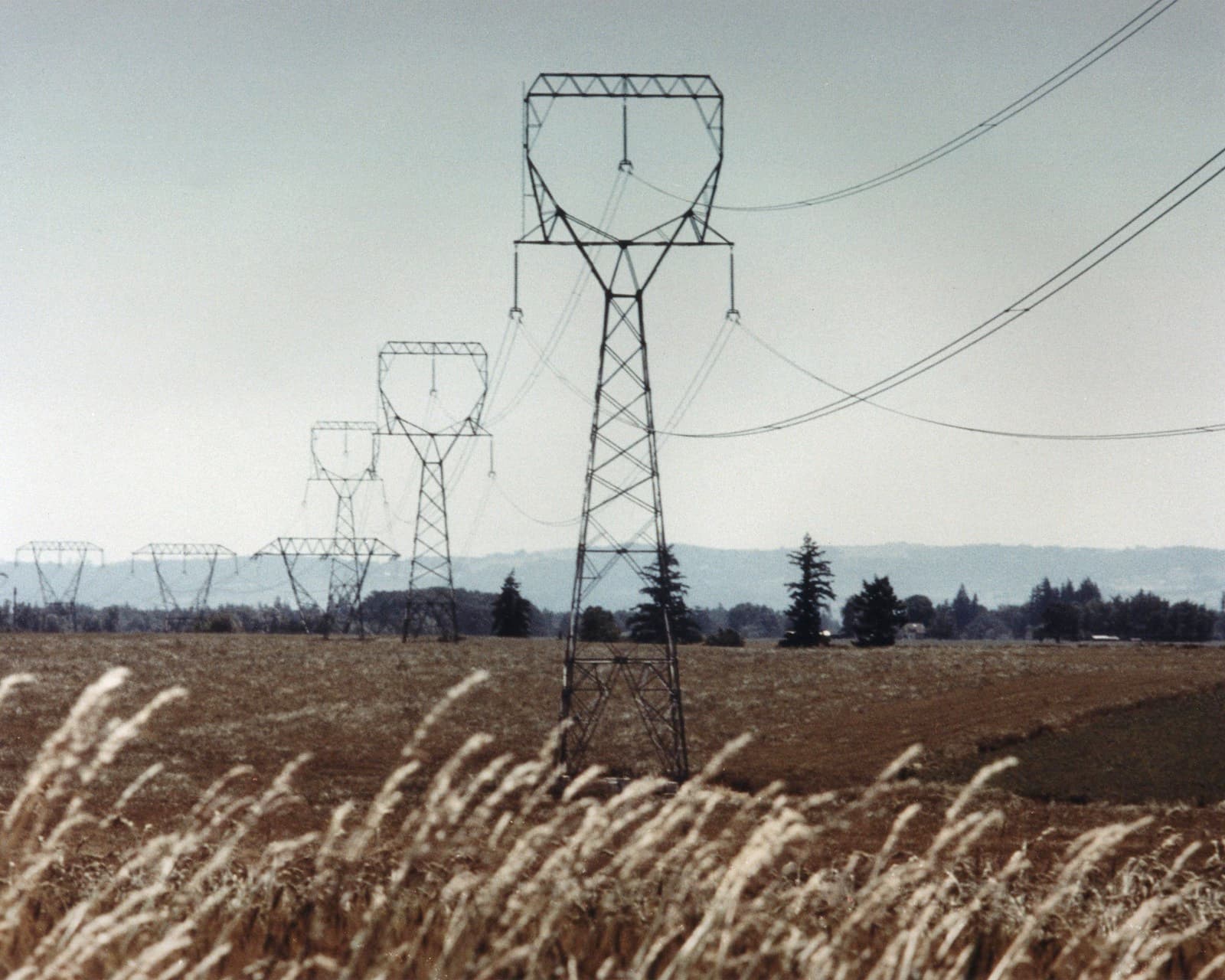
A bipartisan Senate permitting deal would change how federal agencies review energy projects, how some permits are challenged in court and how interstate power lines are approved. It would also make covered data centers pay transmission costs linked to their electricity demand. The draft could help both renewable-energy and fossil-fuel developers, but it raises questions about how people affected by projects can participate in decisions and contest them.
Four senators released the proposal Wednesday, Sept. 30. It has not received a vote; negotiators have discussed taking it up after the November midterm elections. Here are five proposed changes and the questions each raises.
How would federal environmental reviews change?
The draft Bipartisan American Affordability and Jobs Act of 2026 would revise the National Environmental Policy Act, or NEPA. That law requires federal agencies to consider possible environmental effects before approving projects it covers. The bill would not end environmental review: It would change which decisions require particular reviews and when an agency can rely on work already done.
One change would narrow which decisions count as major federal actions subject to NEPA. In some circumstances, an agency could use a state, tribal or other federal review instead of preparing a separate NEPA document. The draft would also let agencies rely for longer on certain programmatic reviews.
Those changes aim to reduce repeated work and shorten the path to a decision. They also make the adequacy of a review used in place of a separate federal document more consequential for people trying to understand a project's effects. The proposal reaches beyond NEPA, changing procedures under the Clean Water Act, Endangered Species Act and National Historic Preservation Act.
The four senators behind the deal are Republicans Shelley Moore Capito and Mike Lee and Democrats Sheldon Whitehouse and Martin Heinrich, leaders of the Senate's environment and energy panels. Capito argues the proposal would speed construction while preserving environmental protections. Whether its revised reviews provide enough opportunity to identify harm is a central point of dispute.
How would permit lawsuits and public participation change?
The draft would shorten the time available for many permit-related court challenges. A 150-day filing period would apply to many claims, but it is not a universal deadline: The rules differ by law and type of claim. The bill would also change who may bring some claims. Some challenges would depend on whether a person submitted a sufficiently detailed public comment raising the issue earlier in the process.
Public comment would not disappear; the draft retains comment requirements in some circumstances. But a requirement to identify a problem with sufficient detail before going to court could matter to someone who learns of a project's potential effects late or lacks the resources to scrutinize technical documents during the comment period. That is a possible consequence of the proposed rule, not a finding that every affected person would lose the ability to sue.
The Associated Press reports that the proposal would also restrict challenges under the historic-preservation law. Brad Campbell, president of the Conservation Law Foundation, has criticized its potential to weaken clean-water and endangered-species protections and limit scrutiny of project impacts.
Tribal participation is another contested part of the deal. Heinrich says the proposal would codify tribal consultation and provide funding for Tribal Historic Preservation Officers. The National Association of Tribal Historic Preservation Officers opposes it, saying the measure would undermine Tribal Nations' sovereignty and their government-to-government relationship with the United States. Environmental advocates have also raised concerns about state and tribal authority. The draft's practical effects on consultation and challenges remain disputed; neither side's position means those processes would simply vanish or remain unchanged.
How would interstate power-line approvals and grid connections change?
Permitting is only one obstacle to getting new electricity onto the grid. Proposed power sources also need a connection, and transmission lines must be planned and built to carry their output. The Senate deal addresses those bottlenecks alongside environmental review.
It would strengthen the Federal Energy Regulatory Commission's authority over major interstate transmission lines and allow federal review to proceed while state reviews are underway. The proposal also calls for regional and interregional transmission planning and measures intended to make it easier for new generators to connect to the grid. Parallel reviews could shorten the wait for a decision without, by themselves, eliminating state review.
Free newsletter
Get the morning briefing
Start each day with the stories that matter and why — a short, free email from our newsroom.
Clean-energy groups support the transmission provisions as a way to get more projects built and meet growing electricity demand. But faster review and more durable permits would not be reserved for wind or solar: Fossil-fuel developers could benefit, too. That makes the balance between building power lines and retaining effective checks on individual projects consequential.
The potential gains are substantial, but they are projections. Canary Media reports on modeling that estimated roughly $7 billion less in electricity-delivery costs across four grid regions by 2035 under a scenario using the bill's transmission reforms, compared with business as usual. That estimate accounts for $1.9 billion in new transmission investment. The model also estimated about $1.1 billion in residential bill reductions, nearly 100 gigawatts of additional wind, solar and battery capacity, and nearly 40 gigawatts of additional interregional transmission capacity. None is a guaranteed result of passing the bill.
Who would pay for transmission linked to data centers?
The bill would require covered data centers and other high-density computing facilities to pay transmission costs associated with their electricity demand. Its aim is to keep costs attributable to those large electricity users from being shifted to households and businesses that also rely on the grid.
That provision addresses a different issue from whether a power line can be approved quickly: who bears the cost of serving a large new customer. Heinrich says the measure would expand grid supply, create jobs and lower electricity costs while making data centers pay for the upgrades they require. Those are his expectations for the proposal, not promised changes to any household's bill.
For consumers, the distinction matters. A rule assigning transmission costs to covered facilities could protect other customers from those particular expenses. It does not establish that overall electricity prices will fall or that the modeled transmission buildout will happen. Both depend on decisions and outcomes beyond the draft's cost-allocation provision.
Would federal agencies have less room to reverse issued permits?
The deal would protect certain already-issued federal permits from later agency action, with exceptions. For developers, a permit that is harder to reverse can make planning less uncertain. For people concerned about a project's impacts, the limits and exceptions determine what room remains for further agency action after approval.
This protection also matters to the politics of the deal. Whitehouse has said he needs more clarity on how it would prevent administration actions from blocking wind and solar projects. The draft's permit protections should not be treated as proof that his concern has been resolved.
Nor is passage settled. The White House has endorsed the proposal, but Politico reported Thursday that Rep. Jared Huffman said most House Democrats oppose the agreement. Republican negotiator Rep. Brett Guthrie had not endorsed it as of that report. If the Senate takes up the bill after the midterms, lawmakers will still have to decide whether faster, more predictable approvals leave people and governments affected by projects enough power to examine and challenge them.
Comments
Comments are written by readers. They are not reporting or opinion from The Wells Post.
Share your view on this story. Criticise ideas and public records, not other readers.
Most comments appear right away; some wait for a moderator first.
Community guidelines
More in our terms and privacy policy.
No comments yet. Start the conversation.